Our New ‘Hood

As promised, here’s a quick peek at our new neighborhood.  These photos were taken last weekend just after our freaky October snowstorm.  The snow only lasted a couple of days.  The dogs and I have moved a couple of weeks ago.  Less than a mile away, still Brooklyn, but technically from Park Slope to Prospect Heights.  With all the headaches and expense of moving a hundred miles away.  But it’s all done, unpacked and organized, and I hope to not go through it again for a long time.

The new place is a fraction of the size of the previous.  But with some perks including an el-e-va-tor for the first time in my life.  And, most importantly, it’s right across the street from The Park (Prospect Park) where I spend every morning with the dogs.  A mandatory ritual with my high energy dogs for the past 15 years or so.  Before 9am, dogs are allowed off leash in a good chunk of the nearly 600 acres.  More about all that here if you’re interested:
http://www.fidobrooklyn.org/

So, here’s my block — the glassy, brand new Richard Meier building with million dollar condos:
http://www.onprospectpark.com/
If you ask me, pretty dull, for such a cutting edge architect.  I’m on the corner on the right in the little tan building:


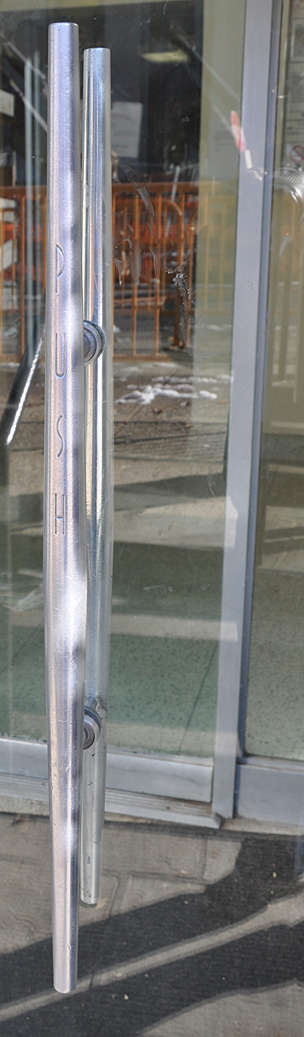
Although my building has sort of a streamline look, all the records I’ve found say 1961.  The entrance door pulls certainly fit the era:
 

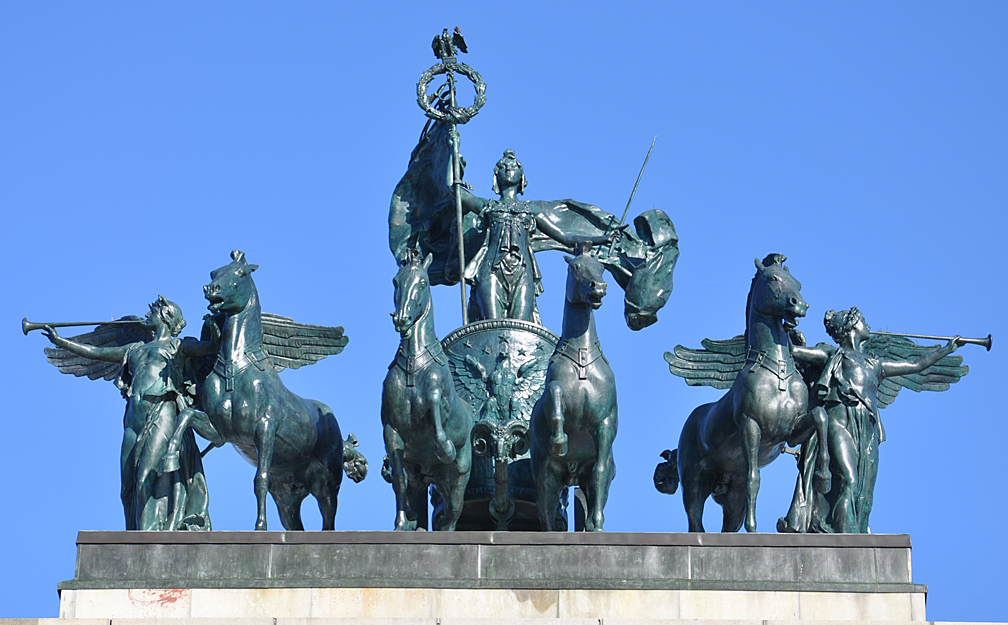
My block abuts the quite grand, Grand Army Plaza with one of Brooklyn’s most famous landmarks — the Soldiers and Sailors Memorial Arch from the 1890s:
http://www.brooklynlibrary.org/civilwar/cwdoc101.html


Just north of the arch is the nifty Bailey Fountain (not on this time of year).  The standing figures look towards Manhattan:
http://en.wikipedia.org/wiki/Bailey_Fountain


And just off the circle is our park entrance — with a much smaller arch — the Endale Arch.  Just through it marks the point where the leashes come off each morning.  This morning though — flooded and downed trees & branches:
http://www.museumplanet.com/tour.php/nyc/pp/36


Just across the street from my building, the stunning Art Deco library:


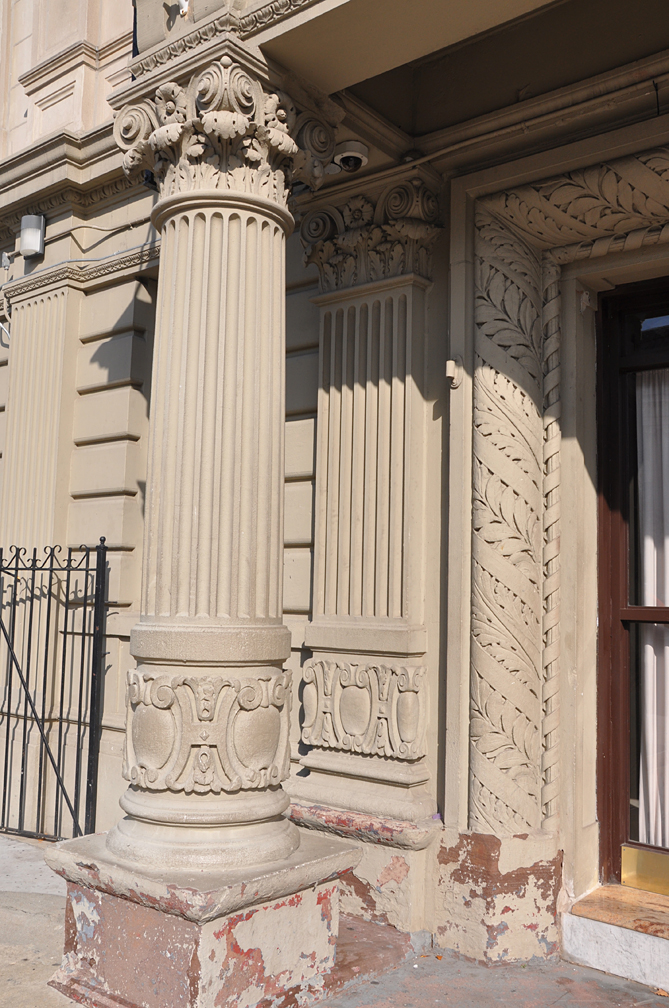
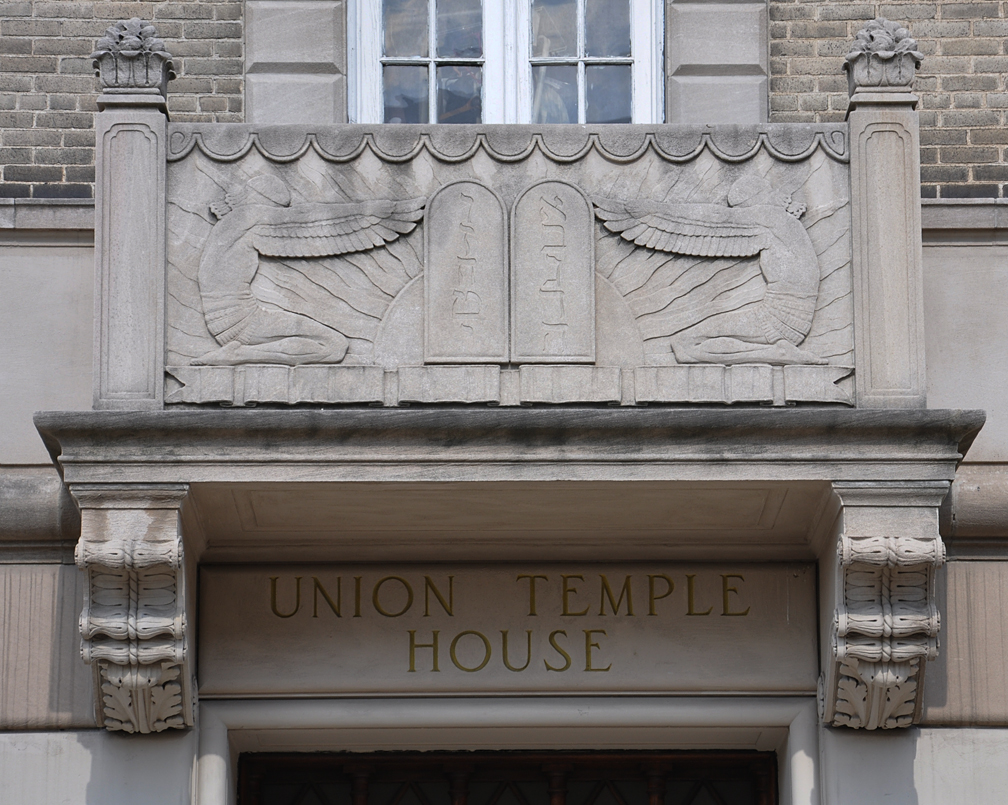
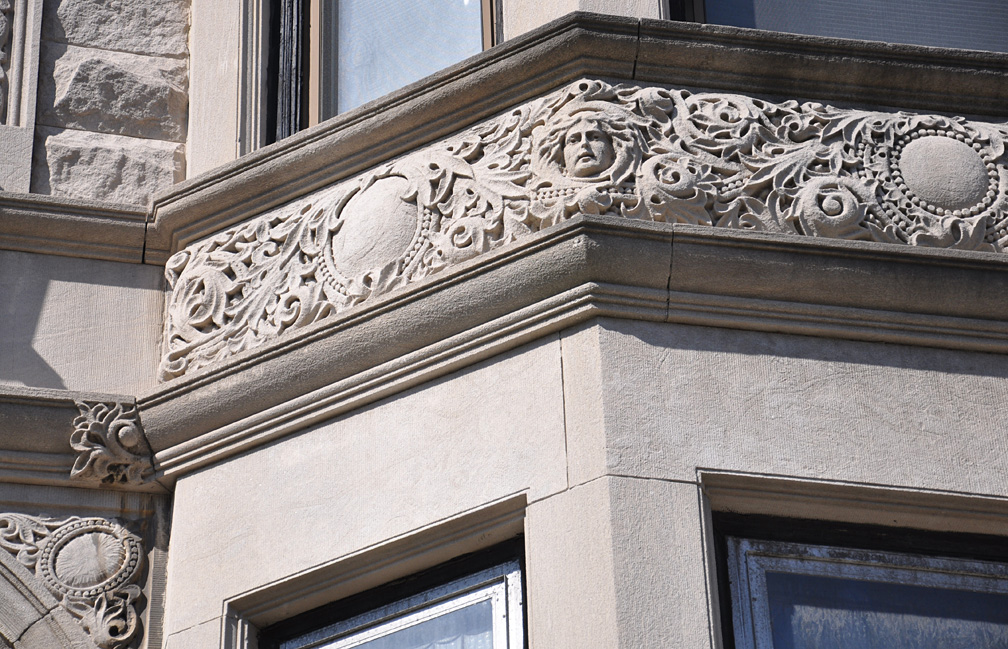
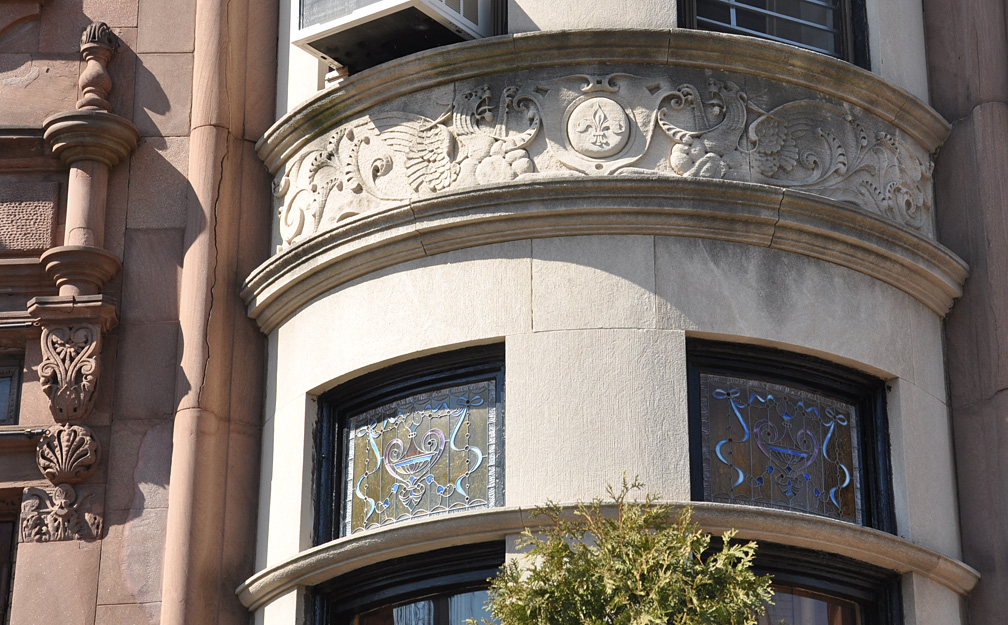
Some not-famous architectural details from my block:
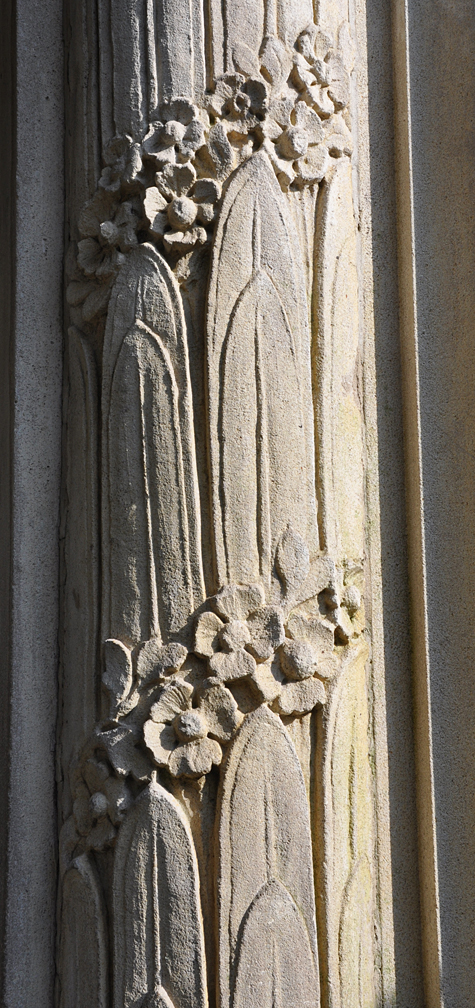
 

While Park Slope is famous for its brownstones and limestones, there’s plenty of that here in “the Heights” as well.  Functioning gas lights as well (see foreground):


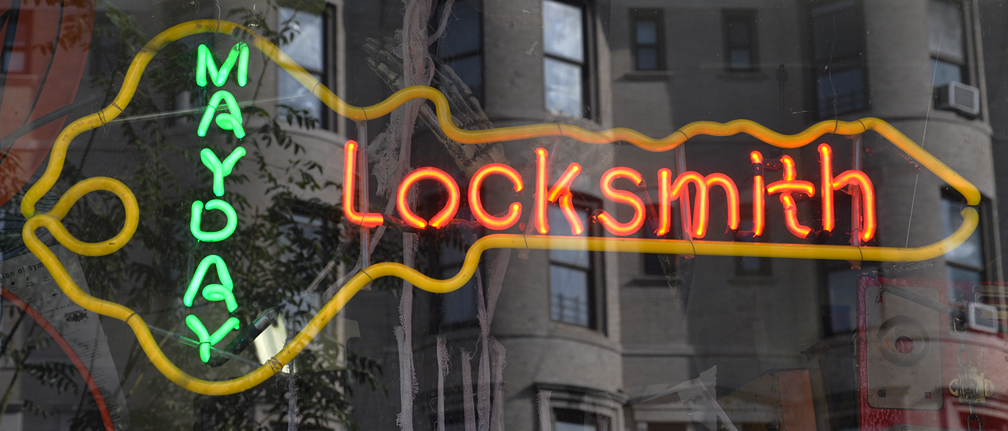
Signs?   Not so many here — or much elsewhere in NYC for that matter.  Sure, Manhattan has some neon — but sadly not nearly the quality or quantity of even a medium-sized city anywhere in America.  Here’s a super cute plastic sign a few blocks from me at King Laundry:


And some other fun signs at my local hardware store.  Which smells like a real hardware should, with super friendly staff, and loose nails for sale by the pound.  They opened in 1964:

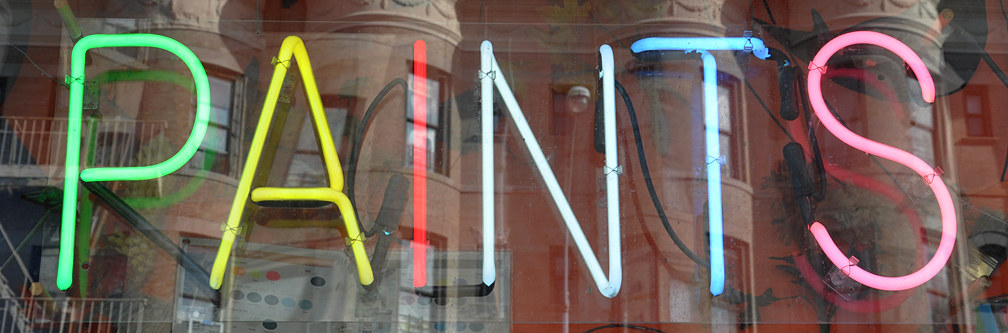
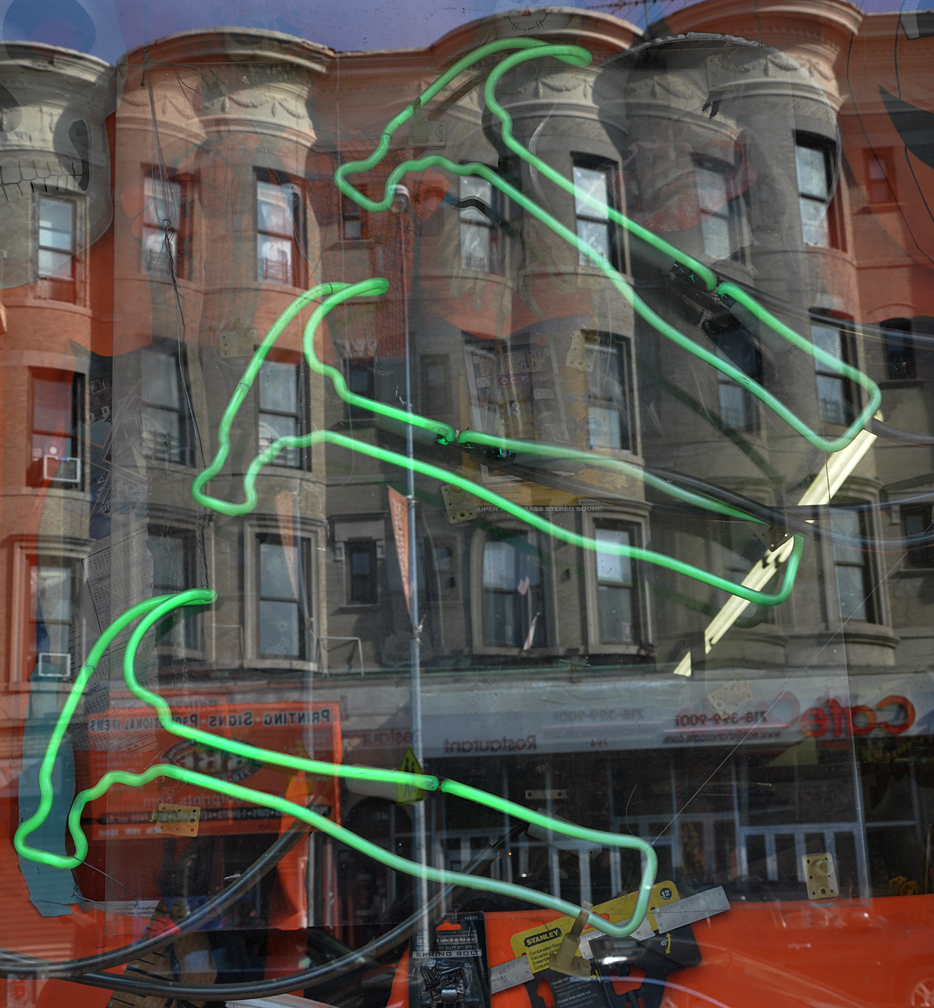
The neon skeleton (window) signs might be from the 1960s — or they might be much more recent — but still, all the hardware classics are here:
The hammer works in 3-part animation:
 

Exploring the main shopping street in the slush last weekend, I encountered this little thing parked on a newspaper machine:


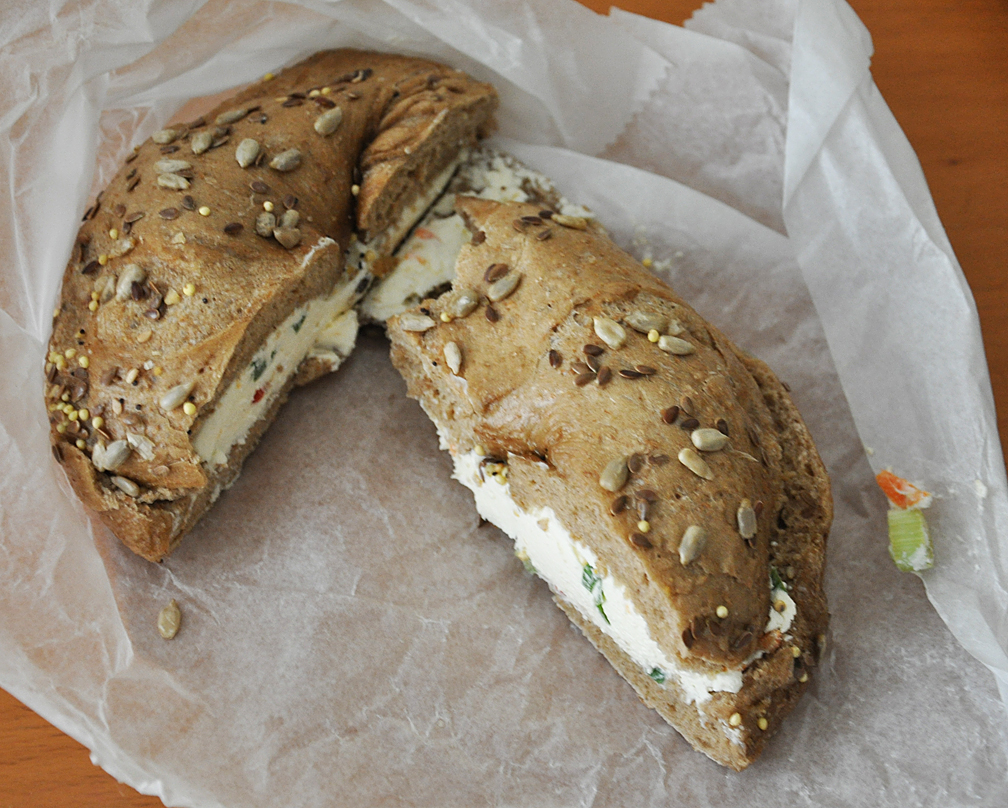
Three Mexican restaurants, a big beer store, a friendly auto mechanic — I’m set!  And I discovered what I believe are the world’s best bagels.  And god knows, I’ve had thousands!  From the “Olde Brooklyn Bagel Shop”, this is a multi-grain with vegetable cream cheese:
 

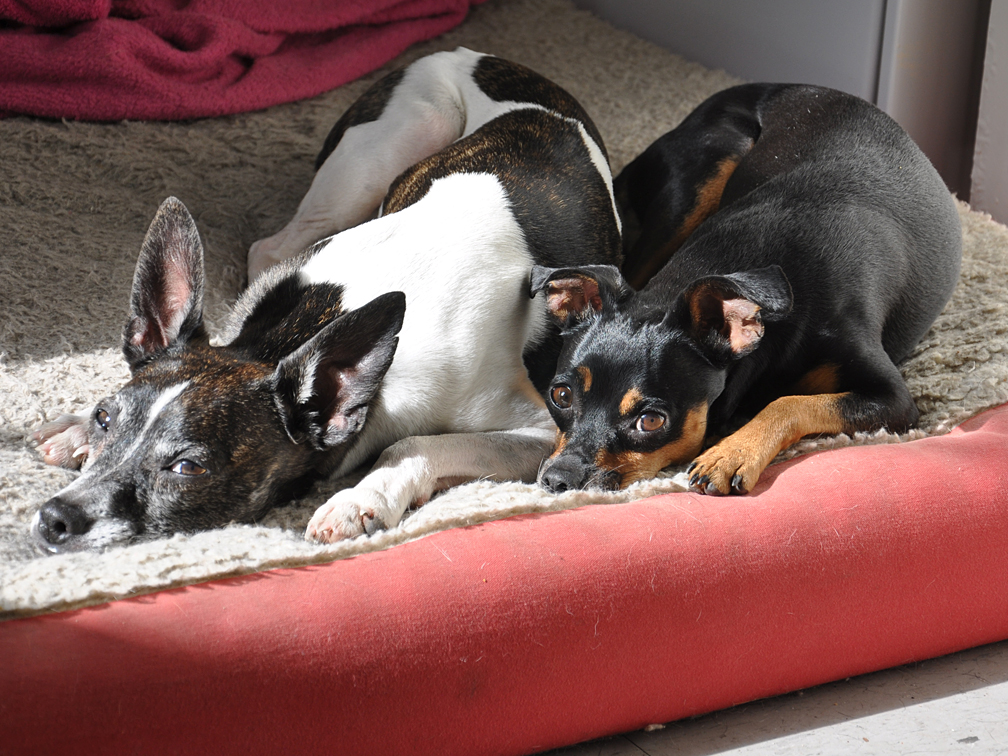
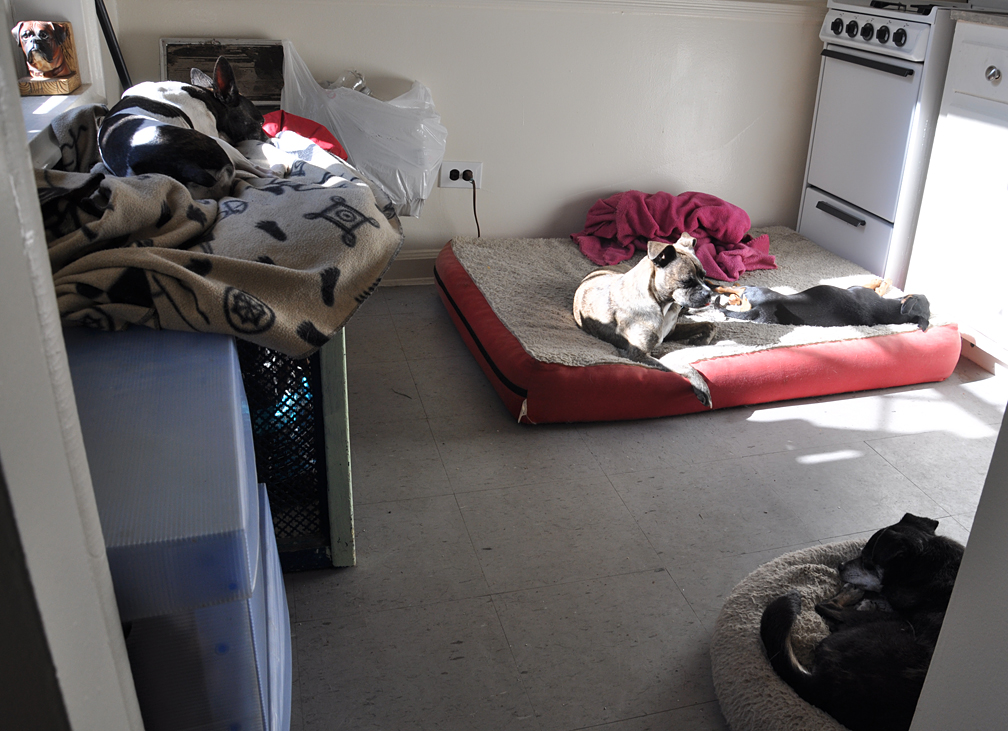
The dogs are adjusting well.  Although the view sucks compared to the one we had, there’s no street noise and still loads of sun for basking:
 

OK — one more gratuitous doggie photo — Nik thinking he’s oh so invisible:


Hope you enjoyed the quickie tour.  I’m back at work on the website, adding the rest of the Oklahoma photos.  Hoping to finish them by Thanksgiving and then start on the Upper Midwest photos.  No roadtrips on the calendar til the next biggie in Spring.  But I’m sure there will be some little getaway before that and I’ll be blogging to you then.
Brooklyn Aftermath

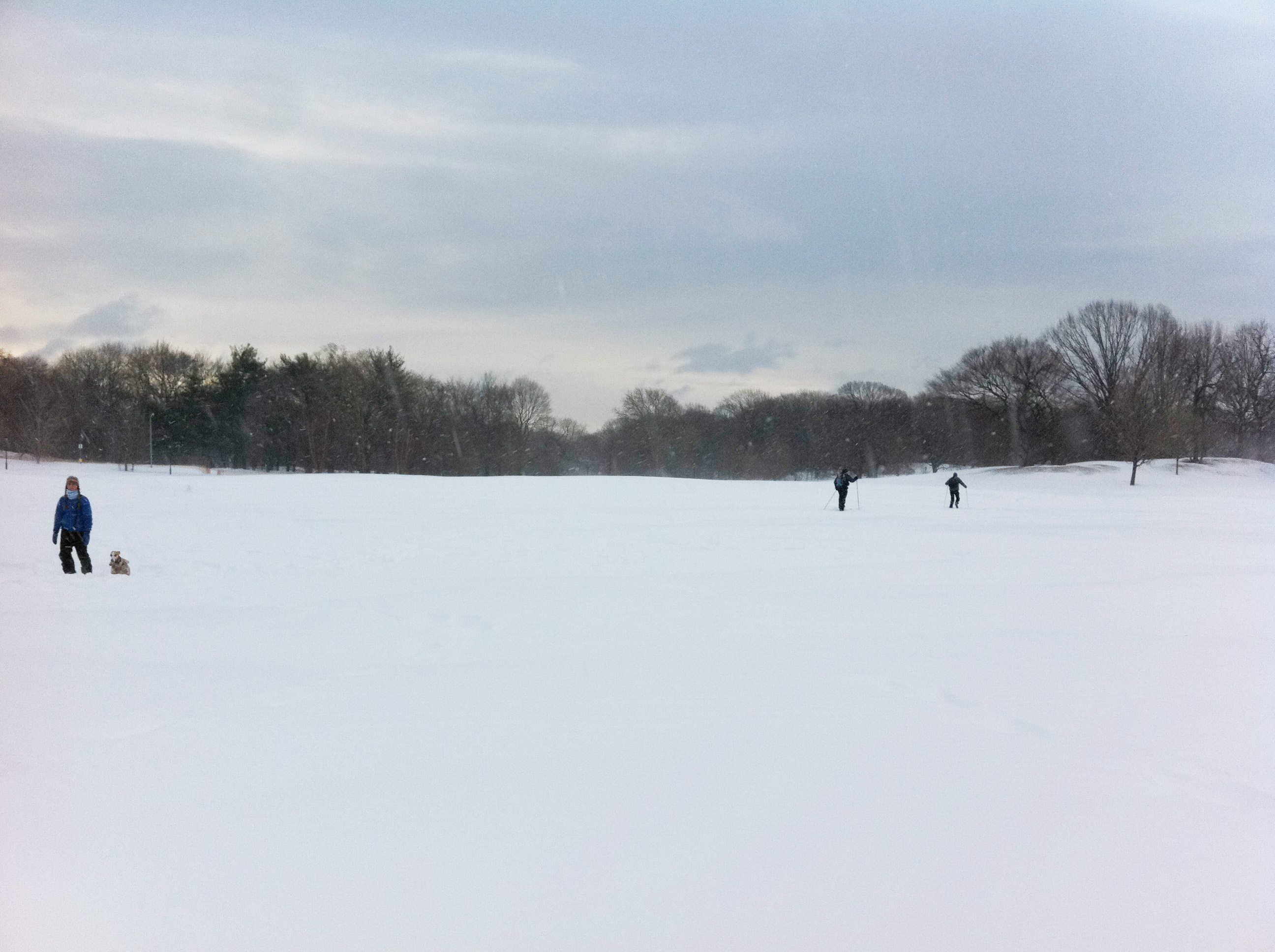
So some snow pictures as promised.  I thought I’d be smart and take iPhone to the park instead of Dee (the real camera).  But little “i” didn’t know what to make of the glare so the pictures were all pretty dark & crummy.  I tried.  It was brutal out there anyway.  The snow has stopped — about two feet of it.  Still blizzardy winds though that come up and blow snow in yer face – ouchy, cold and shocking. 

A few brave souls in the big meadow.  Cross country skiers and a few dogs hardier than mine.

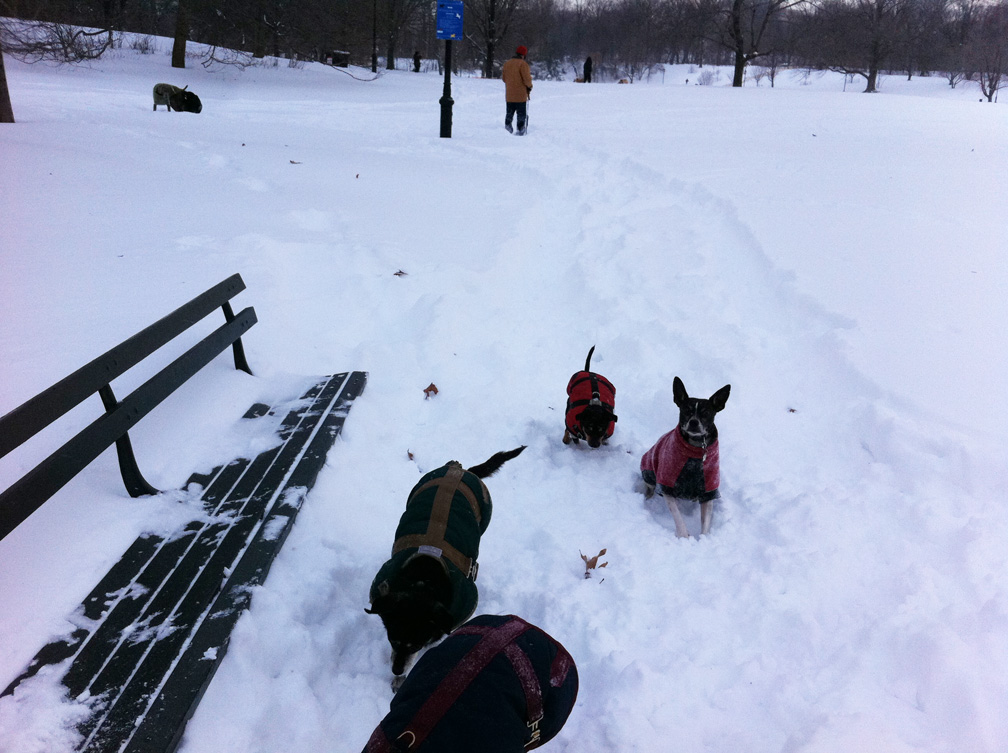
My kids in their serious winter attire.  Sweaters under fleece-lined mini horse blankies.  Except for Nik who’s active enough and hates coats enough that he just does double sweaters.  Nik digs out a ball while Grem seeks possible crumbs.  Fix expresses pure disgust & misery by standing on three legs with her ears pinned.

A buried bench for depth of snow gauge:

Grip doesn’t mind snow:

As long as there’s a ball to be had, Nik wouldn’t notice if the earth was on fire:

We’ll see you all in the spring when this stuff has melted!

Name That Station #1: Phillips 66 vs. Pure Oil Cottages

I get lots of emails asking for help with identifying gas stations.  While I don’t consider myself an expert, I have studied them for years and I’m happy to help when I can.  The subject is way too big for one post so I’ll just offer some basics here about a couple brands & designs and revisit the subject between roadtrips later on.

There’s a lot of confusion out there between Phillips 66 and Pure Oil cottage-style stations so let’s start with some generalizations about them.  It’s actually very easy to tell the difference.  Here’s a classic Phillips 66 from Chandler, OK:

Note the chimney at the front (although not all P66 cottages had these) and the steep gable above the arched doorway.  The round windows on the chimney and the side of the building originally had glass Phillips 66 logos.  This station still has the multi-colored roof tiles. 

Here’s another example of a P66 from Stratford, TX.   Note that this station has the chimney is to the right side of the door.  There’s also an original “P” on this chimney.  Not all P66s had chimneys but the buildings all basically looked like this.

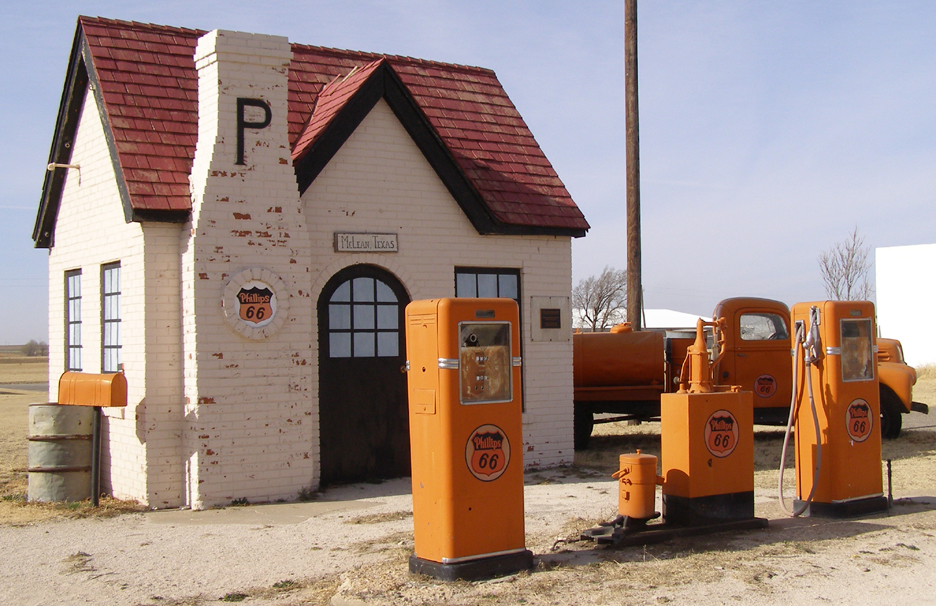
Even this early P66 in McLean, TX (the first built in TX) had a similar design:

Now then, here’s a typical Pure Oil station from Englewood, OH:

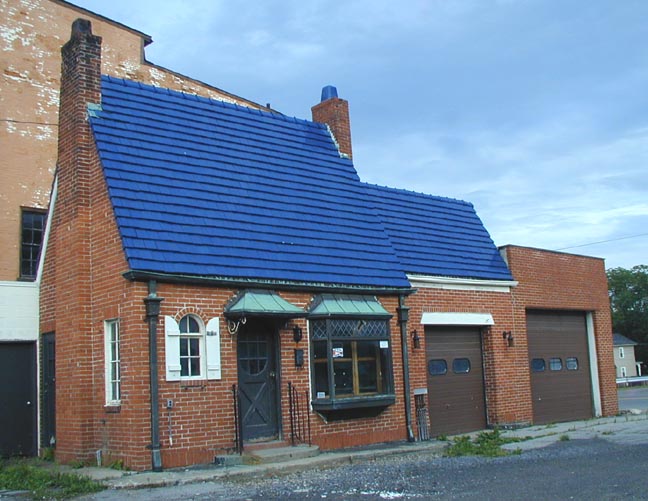
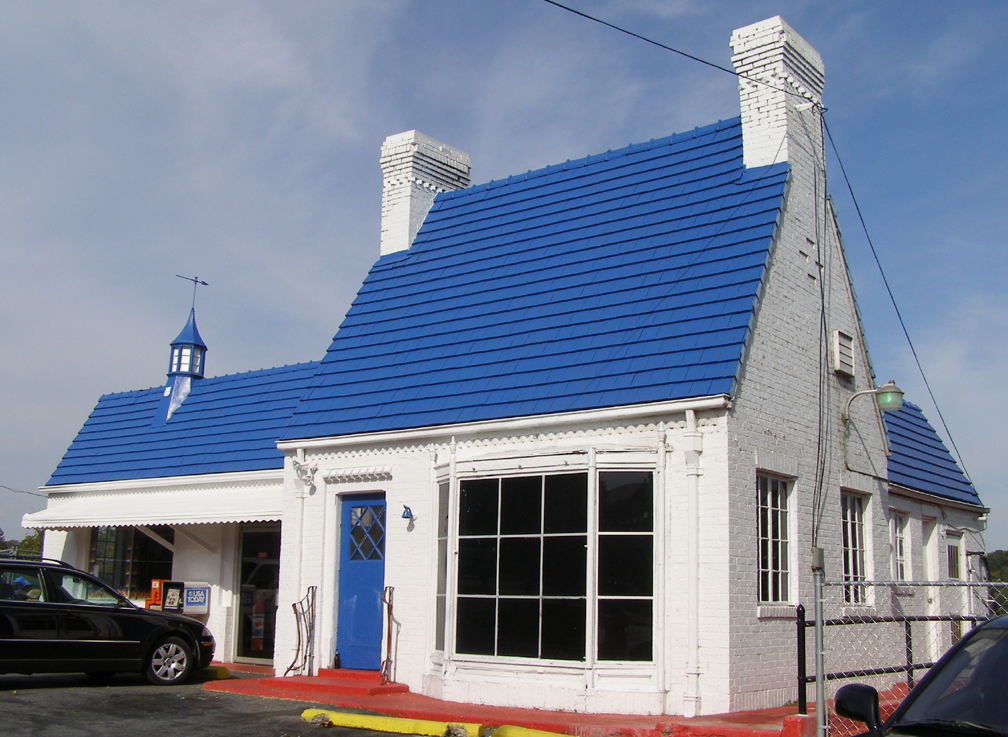
Although the siding has been added, the other building features are original.  Note the differences between this design and the P66 design:  chimneys on the sides of the building, the copper hoods above the left window and doorway, the flower box on the small window on the right, the step and hand rails at the door, the blue porcelain enamel roof tiles and chimney tops.

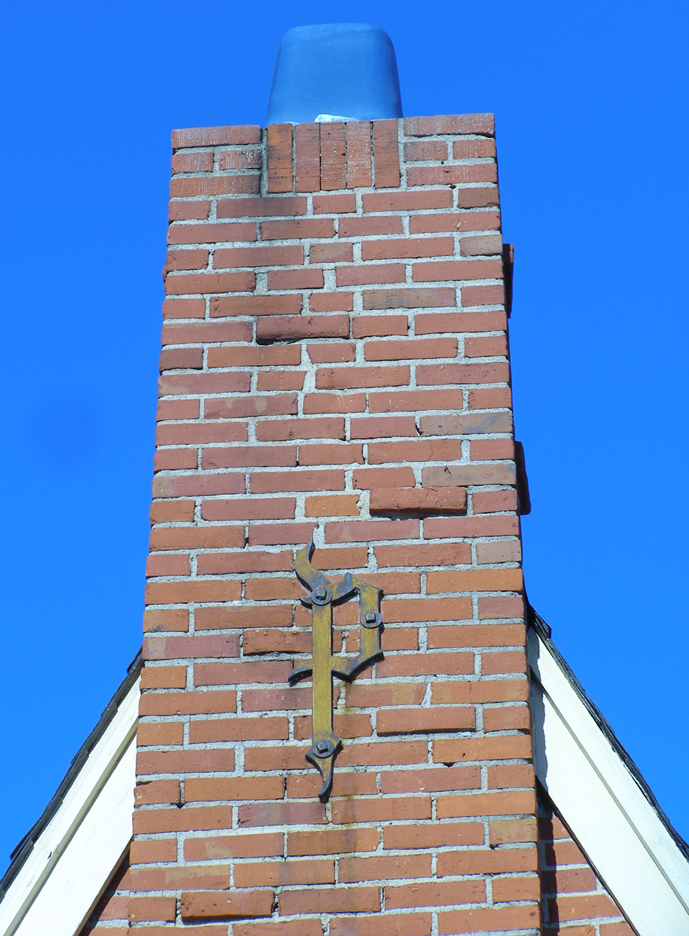
Here’s what Pure Oil’s “P” looked like on the side of their chimneys – skinnier and more Gothic in style than the ones that Phillips 66 used.  This one is from Washington, NC:

The smaller Pure Oil windows had faux open shutters.  The drainage spouts bore “Ps” as well.  There were also brass lamp light fixtures.  This Lyons, NY station still has all of these things.  There would also have been a flower box below the shuttered window:

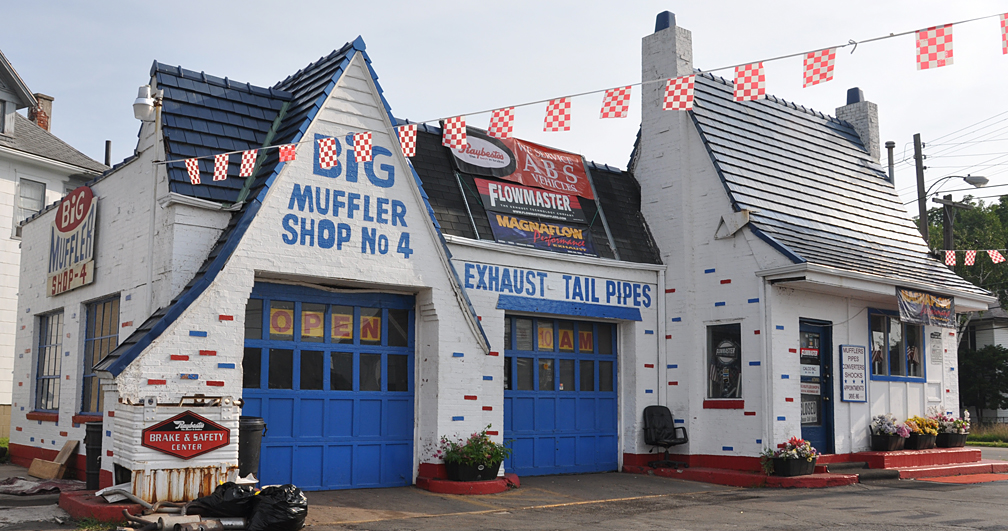
Pure Oil had a few variations of these cottages but with the same details.  Here are a few other examples.  From Dayton, OH.  Even with the office details stripped, you can tell where the larger window would have been.  Even with the roof extended in front a bit, the blue roof tiles and chimneys are there.  The office was messed with quite a bit here:  the door is now where the little window was & the details are all gone.  The brick work here is original and has been emphasized with red and blue paint.  This station has what I call the “slopey bay” on the left – another common design element used by Pure.

Here’s the same basic Pure Oil design with a canopy from Jacksonville, FL.  Phillips 66 did not make a canopy version of their cottage stations.  Note all the door & window details described above are still there:

Pure Oil also produced what I call the “fat chimney” design.  This one is from Lynchburg, VA.  The chimneys are still on the sides of the building and there’s that step-up doorway with railings.  Notice also the weathervane on the service bay part of the building – another uniquely Pure Oil element used with the fat chimney design.
So I hope that helps.  Other oil companies produced cottage stations as well but the details described above should lead you to correct conclusions.  For lots of other examples of Phillips 66 and Pure Oil stations, have a look at the gas station section at my website:
http://www.agilitynut.com/gas/main.html

snapshots from home (part 2 of 2): dogs & buildings

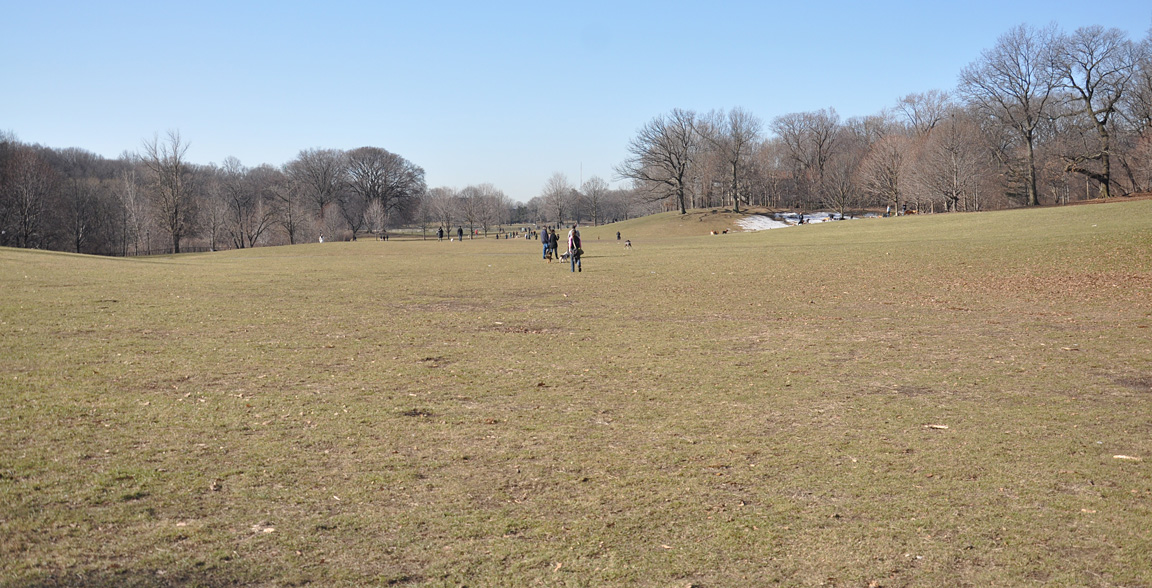
My mornings are spent with my dogs in Prospect Park which is just a block from my apartment. Dogs are allowed off-leash before 9am so I drag myself out of bed after 4 hours sleep to get us there every day. Dogs are only allowed off-leash in the “meadow” but that area is huge, absolutely HUGE. I don’t know how many acres it is but it’s more than any dog park I’ve been to anywhere in the country. It’s not fenced so you do want to train a recall and carry tasty morsels with you.  The roads are pretty far away so there should be enough to keep your dogs busy and safe.   There’s also a great local organization, FIDO Brooklyn, that organizes monthly Coffee Barks, an annual Bark the Herald Angels event, seminars and helps reunite lost dogs with their owners.
http://fidobrooklyn.com/

Looking north:

Looking south:

All this looked completely different until a few days ago.  We got a ton of snow this winter and it was nothing but white and icy for months.  Suddenly, we have 40 and 50 degrees days.  The trees have no signs of buds yet.  I should also say that this was a weekday morning.  On the weekends, there are maybe five times as many dogs and people.

The sudden appearance of grass and dirt means the ground is now fascinating to the dogs.  Here are the butts of my pack of four in the foreground:

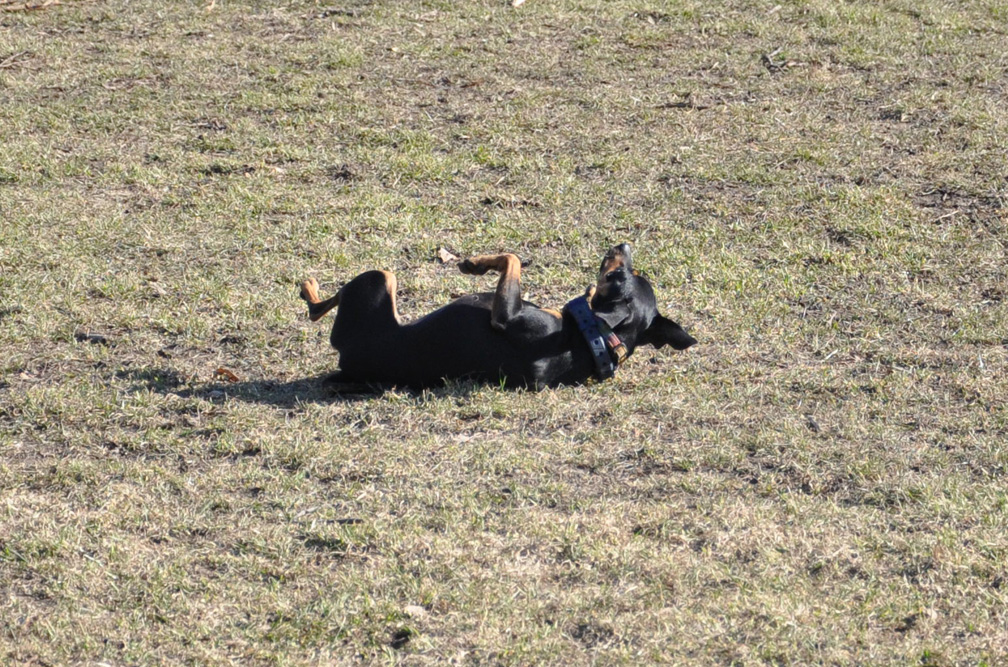
And Grem finding something stinky enough to merit rolling in:

A Corgi enjoying a mudbath:

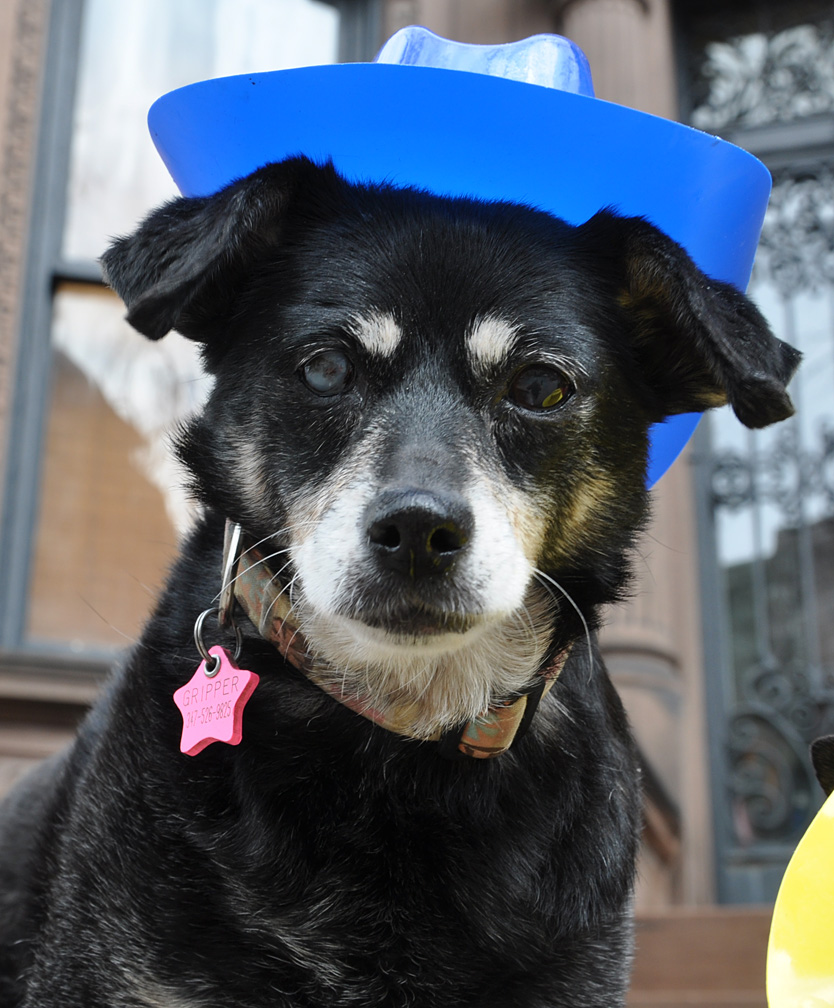
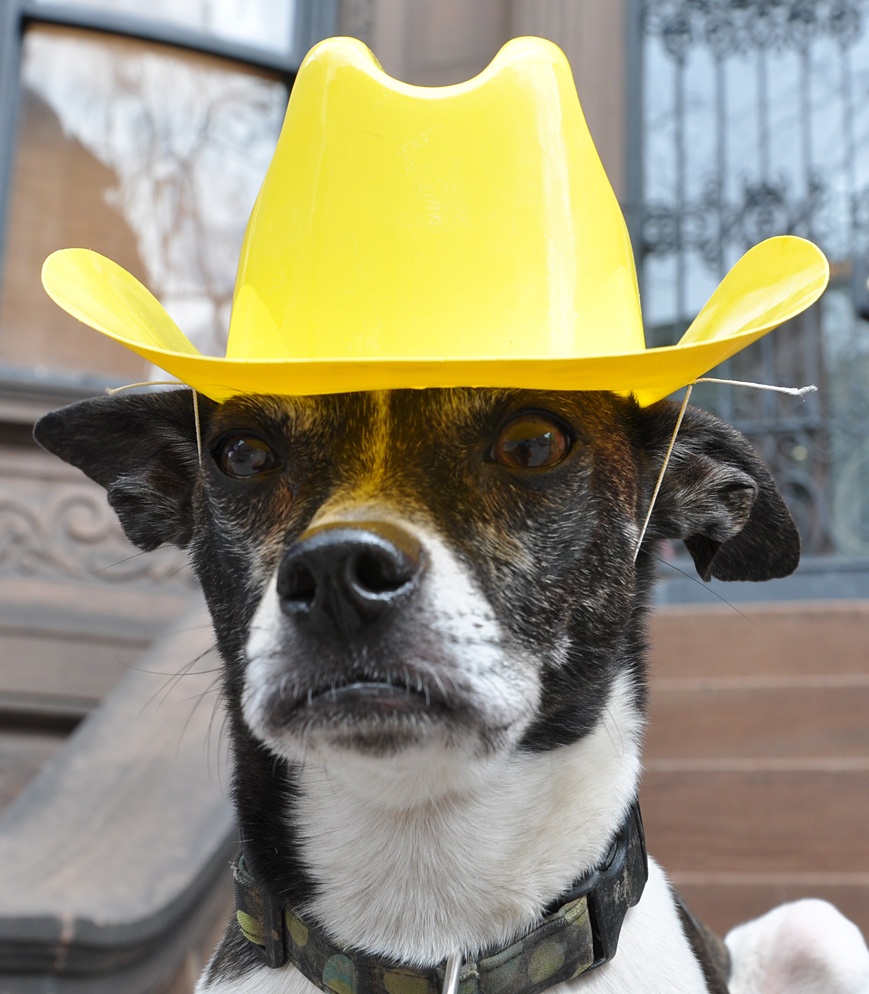
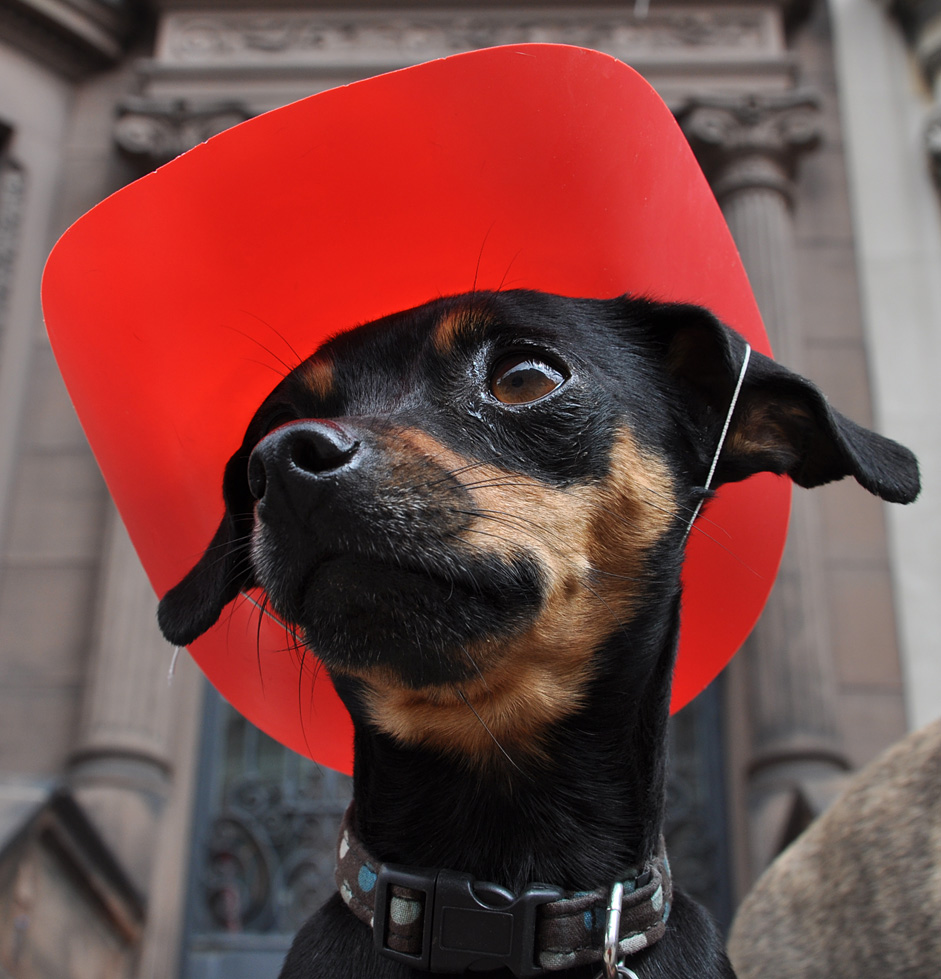
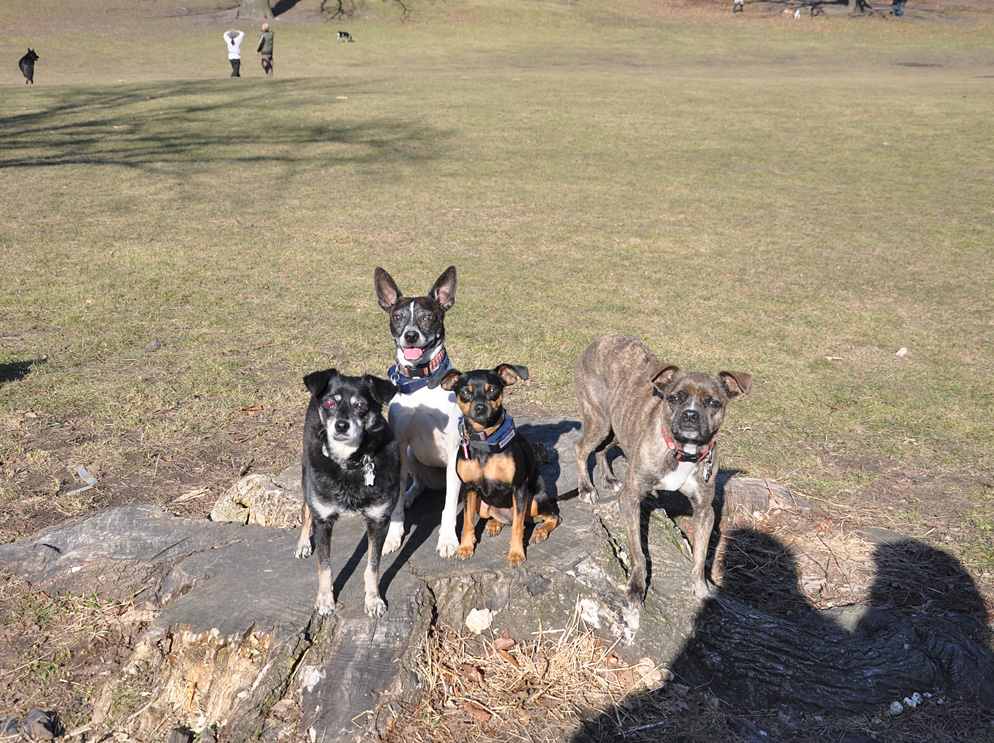
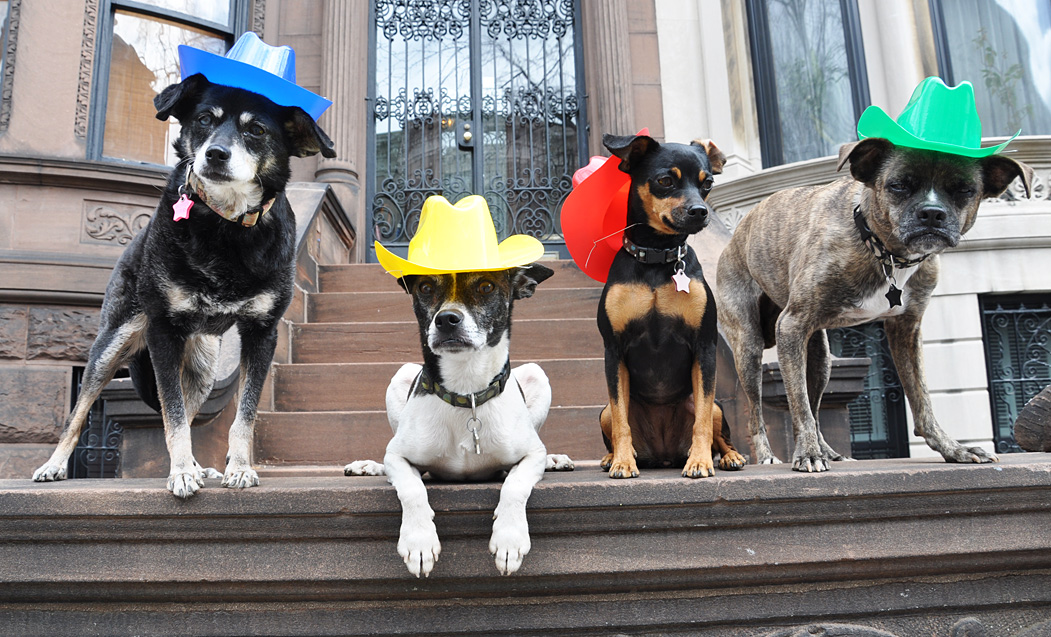
I took a bunch of photos of my dogs running after balls and bringing them back.  But I believe I’ve posted a number of those already at this blog.   So I’ll spare you those and just include a nice group shot.  If you’re not familiar with the cast, left to right is “Grip” (Gripper), “Nik” (Sputnik), “Grem” (Gremlin), and “Fix” (Fix).  You’ll be seeing a lot of them here I’m sure on the upcoming trip (leaving Saturday).

Here a couple of my good chums from the park:  Glenn & Habibi and Douglas & Chi Chi:

People that get up at 7am every day to take their dogs to the park are a special “breed” themselves. 

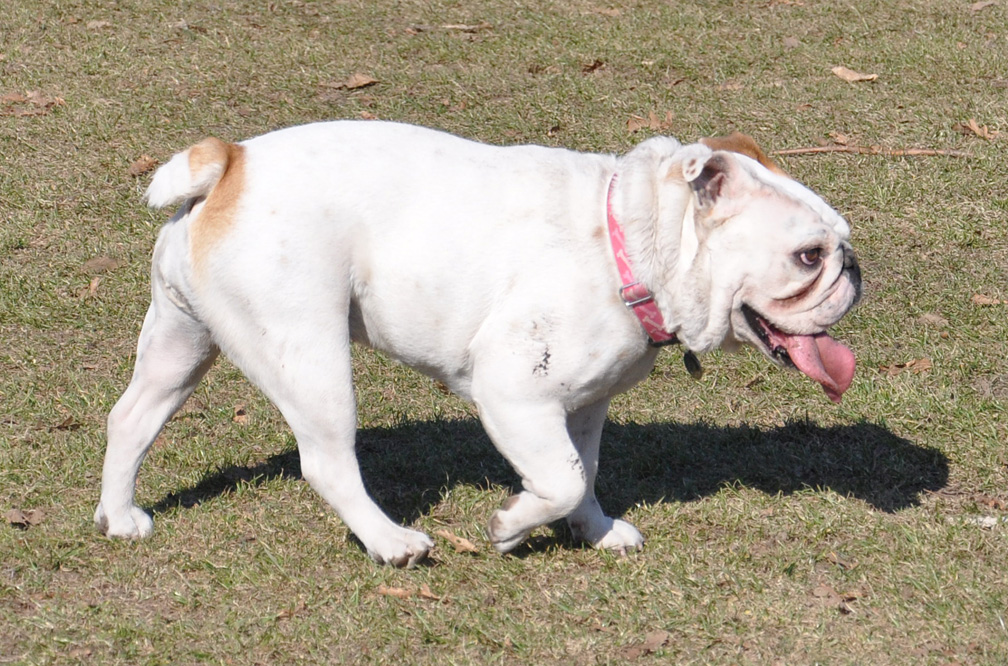
The Prospect Park dogs are an even mix of mutts and purebreeds, all sizes and shapes, and 99.9% well-mannered.   I’m pleased to report that there are a lot of rescue dogs from shelters.  Here are some charming park regulars: 

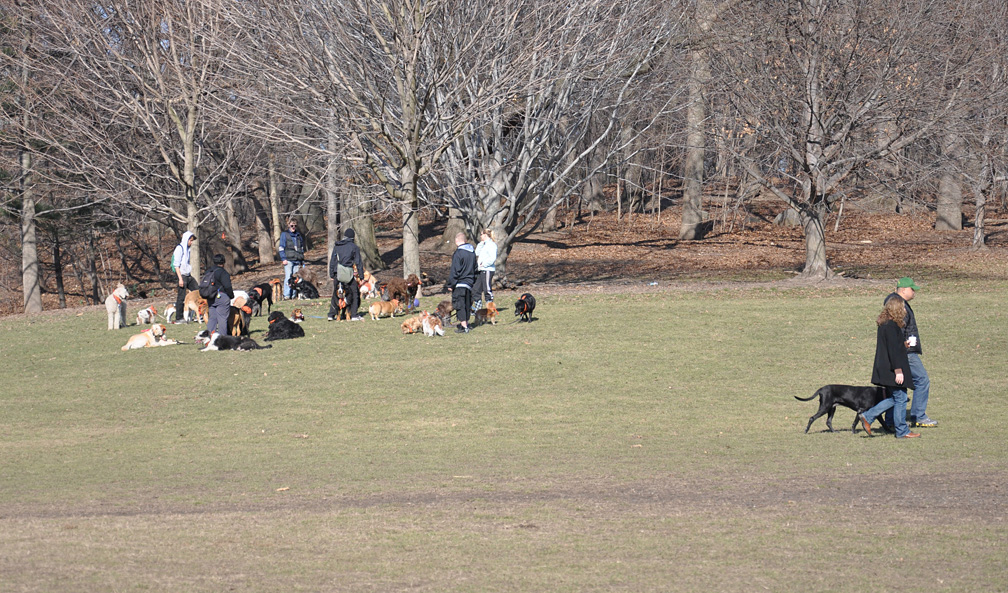
While many owners are off at their day jobs, they pay dogwalkers to bring the dogs to the park.  Most of the dogs lounge on this hill in an enormous pack.

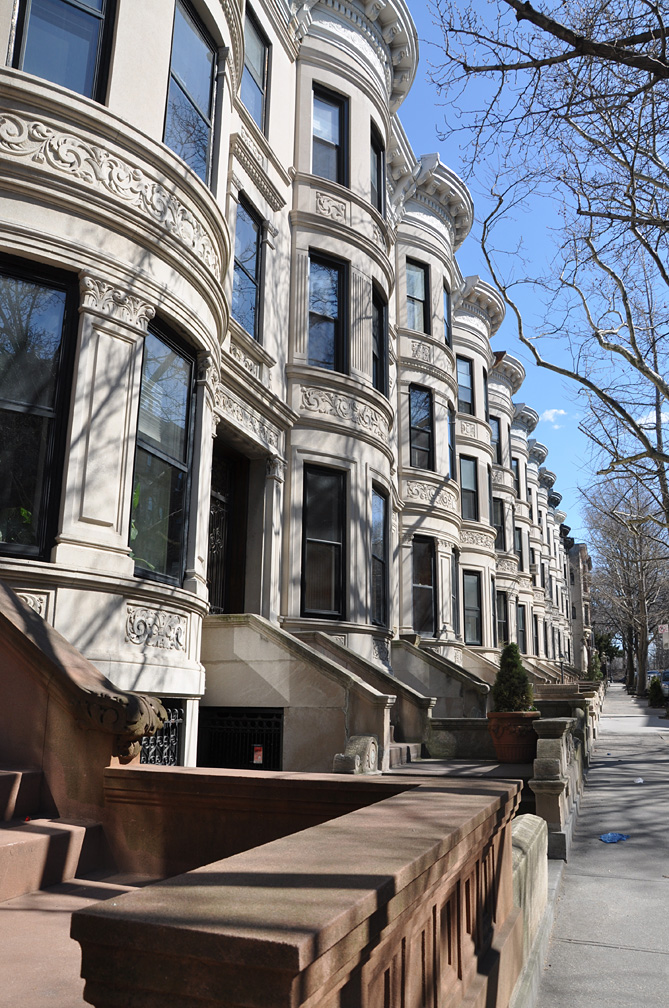
OK, shall we move on out of the park for some buildings on the short walk home?  Park Slope, my ‘hood, is part of “Brownstone Brooklyn” which is usually defined as an area that runs from the park to Brooklyn Heights (the closest neighborhood to Manhattan).  Most of the residential buildings in the landmarked areas are from the late 1800s.  Not really my era – I prefer 1920s onward and especially 1950s-1970s – but I’d have to be heartless not to think these buildings were stunning.  The craftsmanship and variety is incredible.  Here’s a little strip of repetitively gorgeous limestones:

And some details from other buildings:

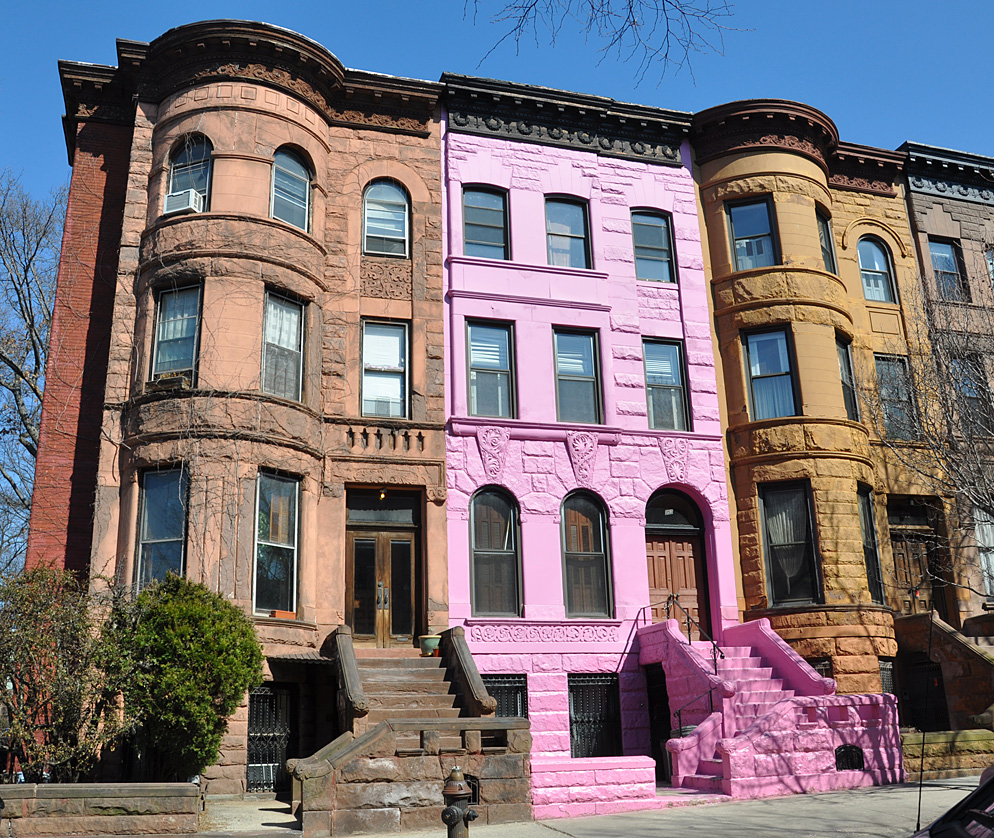
There among all the architectural splendor is this anomaly:  the Pink House.  The owner painted it pink back in 1968 when there were no landmark laws against such things.   There has been some talk of the owner, who is in his 90s, selling the place.  In which case, the building would most likely be repainted.  A house this size in Park Slope goes for about $2 million.

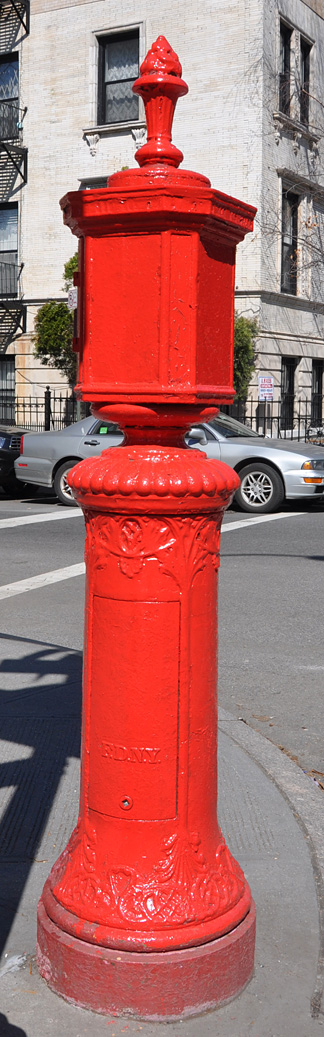
This old fire call box is right across the street from my building so I have great personal attachment to it.  I believe it’s cast iron and probably from the late 1800s.  There’s a modern-looking metal fire alarm device on the other side of it so I think it’s still functional.

A block away from me is this thing which I call the “freaky tree”.  The bronze sculpture is actually called the “Tree of Hands” and is composed of two trees that wind around each other.  The bronze hands convey some sort of message in sign language.  I don’t know what they say but it’s probably some groovy peace & love sort of thing.  Nevertheless, it scares me.

snapshots from home (part 1 of 2): work, work, work

I thought I’d do a couple posts with a local and personal slant for a change.   Some of you might think that I make a living doing this roadside thing.  Far from true! I only make a couple hundred bucks per year from donations & magazines/books using my photos.  So until the Travel Channel offers me a reality show, or Diet Coke or Chevrolet become sponsors, I’ll be toughing it out here in NYC, putting in 60-hour weeks to pay for these big roadtrips.

Here are a couple buildings that have been part of  my daily life for many years.  This is one of my favorites that I pass every day on my walk to the subway to work.   Known as the Montauk Club, it was built in 1891 in the Venetian Gothic style.  It was inspired by the Ca’ d’Oro in Venice.  The building is used a lot for movie shoots and weddings. 

terra cotta details with Montauk Indians & European settlers:

cast iron fences:

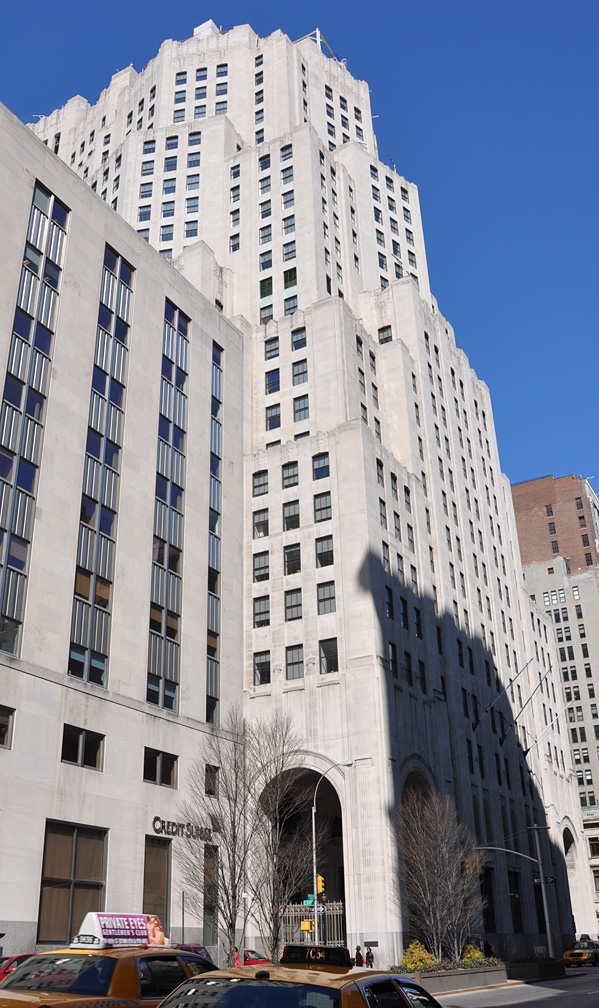
I’ve worked in this building in Manhattan for about 14 years now.  The building at the left with the “Credit Suisse” nameplate is actually a separate building.  My building is the Art Deco one on the right.  It has a stunted look because it was never finished.  There were plans for 100 stories but then the Depression happened and they just capped the building off at 29 floors. 

Lots of nice exterior details:

including several of these still functioning bronze & glass lamps which must be about five feet tall:

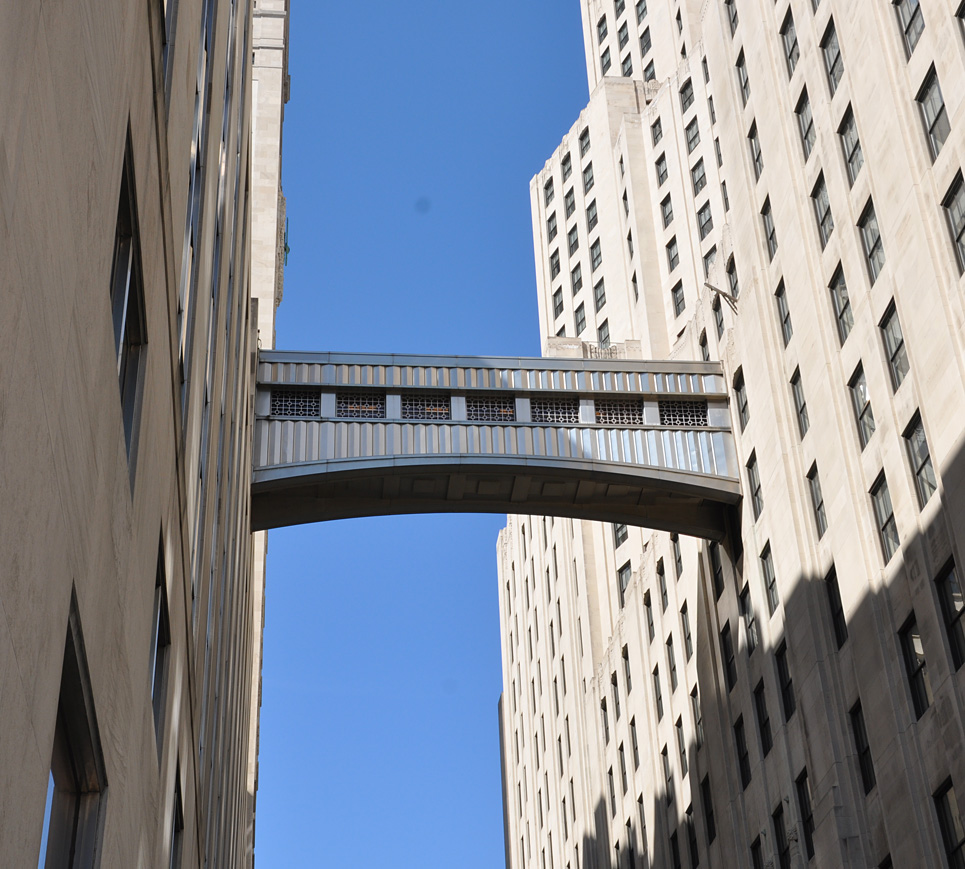
It was originally Metropolitan Life’s North Building and there is still a skywalk connecting the two buildings.  I don’t believe the skywalk is used any more:

I’d love to take some lobby photos but I’m sure the guards would tackle me.  I can only find one interior photo on-line which doesn’t show much but you get the idea:  loads of marble, oil portraits, and high ceilings. 
http://www.flickr.com/photos/37896716@N00/191148893/

From the 20th floor, here’s a view of the Met Life Building and its clock.  There are clocks on all four sides of the building.  The modern building to the left was completed last year:

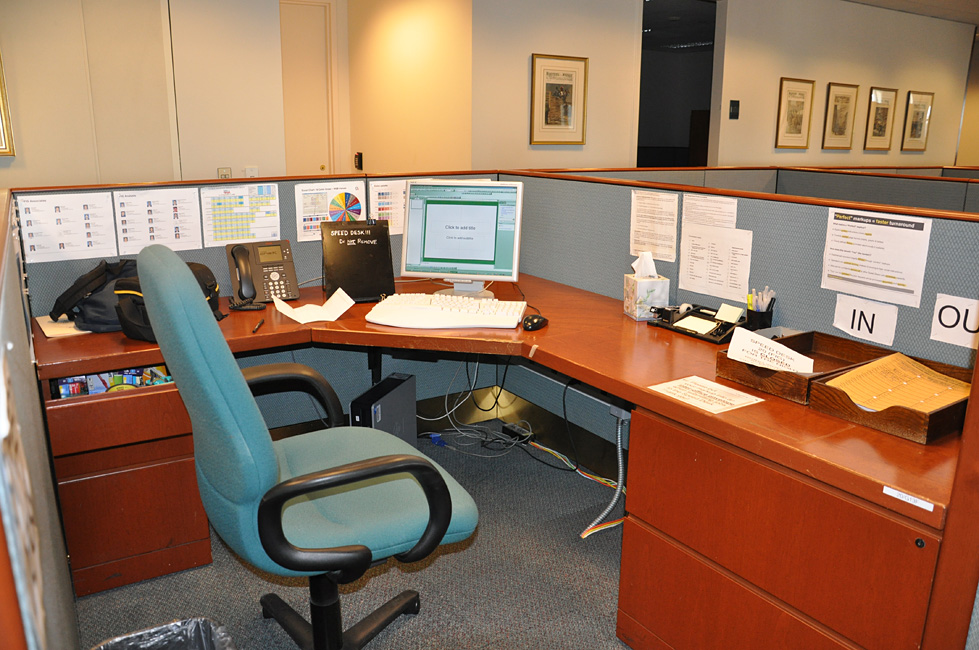
And here’s my desk — for the day anyway.  We are moved around where needed like little document processing soldiers.  When asked what I do for a living, the simplest answer is “fancy typing”.  I know nothing about technical computer stuff — but I can do just about anything in Word, Excel or Powerpoint. 

Canada Dry Buildings

I have long been fascinated with bottling plants.  As a child, I remember going on a field trip to the local Coca-Cola plant in Ventura, CA.  It was spellbinding watching the assembly line conveyor belts with bottles being filled and loaded into wooden boxes.  I don’t remember what that building looked like but I don’t believe that it’s still around.  There are probably 100 or so old Coca-Cola buildings that survive around the country.  However, there are very few examples of buildings from other brands.  I don’t know if it’s that the buildings were not noteworthy or if they were destroyed. 

Anyhow, I wanted to share this great little page of photos and research that traces the history and remaining examples of Canada Dry plants.
http://silverspringhistory.homestead.com/canada.html

I have several examples of these 1940s Canada Dry buildings scattered around my website — here are a few:

In Silver Spring, MD – from 2006 when the building was being converted into the Silverton condos:


here’s the finished product:
http://www.flickr.com/photos/mdmarkus66/3233989985/

In Minneapolis, MN – from 2008 when I believe it was being used as some sort of warehouse:

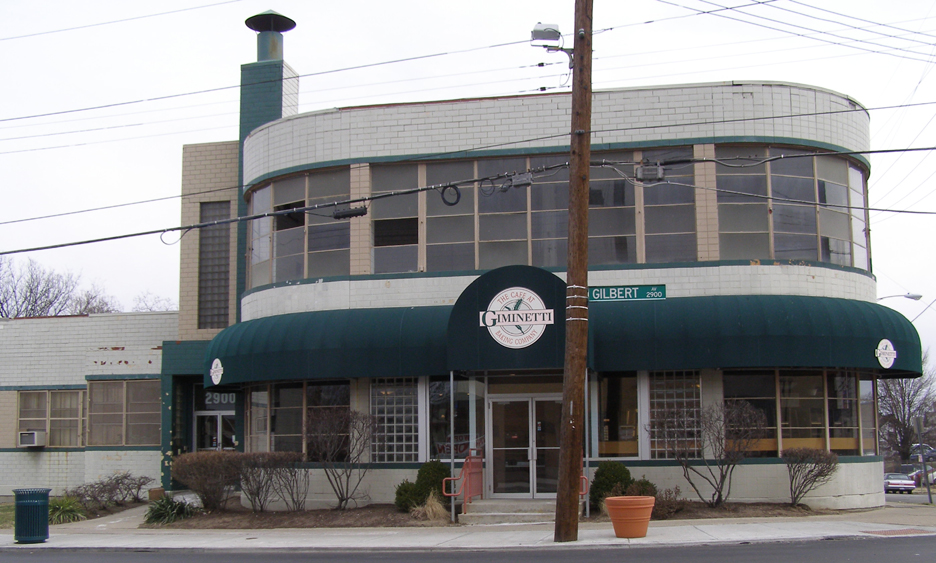
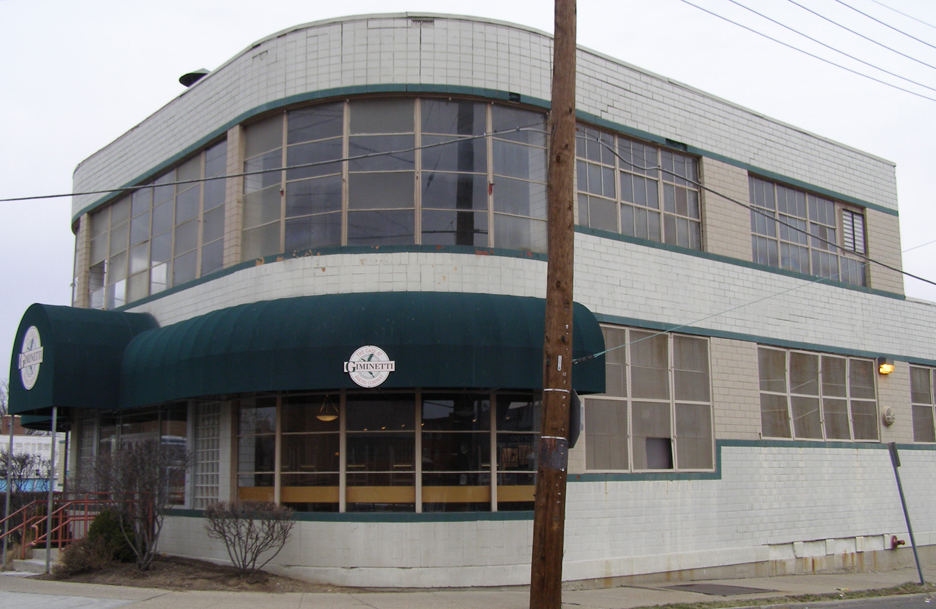
In Cincinnati, OH – from 2006 when it was home to the Giminetti Baking Co (which I believe is still there):

In San Diego, CA – from 2009, now obviously converted into a furniture store:


[photo above courtesy of Gregory May]
also, a photo of the front of the building at the store’s website:
http://www.consignmentclassics.net/ 

Keep an eye out for these distinctive buildings and let me know if you find any others.  If you’re interested in Coca-Cola and other bottling plants, here’s a link to that section of my website:
http://www.agilitynut.com/beverage/main.html

Little Taverns

If you’re not familiar with Little Tavern restaurants, or even if you are, I think you’ll really enjoy a peek at what Spencer Stewart has put together on the subject.  Spencer has been photo-ing and researching diners for many years.  He’s now become obsessed enough with Little Taverns that he’s been making models of them — one nearly life-sized.  His recent post contains loads of info and vintage photos:
http://dinerman.wordpress.com/2010/01/15/little-tavern-locations-updated-list/

I’ll give you a quick “snapshot” here.  Little Taverns were inspired by White Castle restaurants.  By the 1940s, there were nearly 50 of these little porcelain enamel clad buildings installed in the DC/Baltimore area.  Here’s a photo from 1972 of Harry Duncan, the founder of Little Tavern, posing with a model of what the buildings looked like originally:


photo credit:  http://silverspringhistory.homestead.com/LittleTavern.html

Although the last location closed in 2009, a handful of Little Tavern buildings still survive.  This location in Laurel, MD was the most intact example of the chain in 2004 when I took this photo.  I hope these signs have been stashed away somewhere because as far as I know, these were the last remaining examples of them.

By 2008, the signs were gone, the door bricked up & building details removed as this building was converted into a donut shop:
http://www.flickr.com/photos/army_arch/2787171142/ 

This location in Baltimore was demolished shortly after I took this photo in 2003.  Note the then intact “Buy ’em by the Bag” sign on the side of the building:


Not all the news is bad.  This location in the Georgetown neighborhood of Washington, DC was restored over several years and put to use in 2007 as “Sweetgreen” (a salad and frozen yogurt place):

For more photos and info, I have a couple pages about Little Taverns at my website:
http://agilitynut.com/eateries/lt.html

And be sure to check out Spencer’s post mentioned above.

Revving the Engine

A long overdue hello to my virtual passengers.  With another big roadtrip just a week away, I thought I’d touch base and make sure I remembered how to log in and post to this blog.  Yes, I’ll be posting here nightly as the dogs and I head South for a month.  I got Sparkle checked out this week and spent close to $1,000 for new front & rear brakes, a tune-up, etc.  So hopefully this will be  a safe and trouble-free trip.

I’ve been toying with a new blog approach for awhile now.  Not that I’m ready for a big commitment but I would like to post now and then from home base when I come upon something I consider noteworthy or fascinating.  To me anyway.  I have a few ideas and will post them between now & the trip.  These little quickie posts will probably be mostly links to other sites that I hope you find interesting.

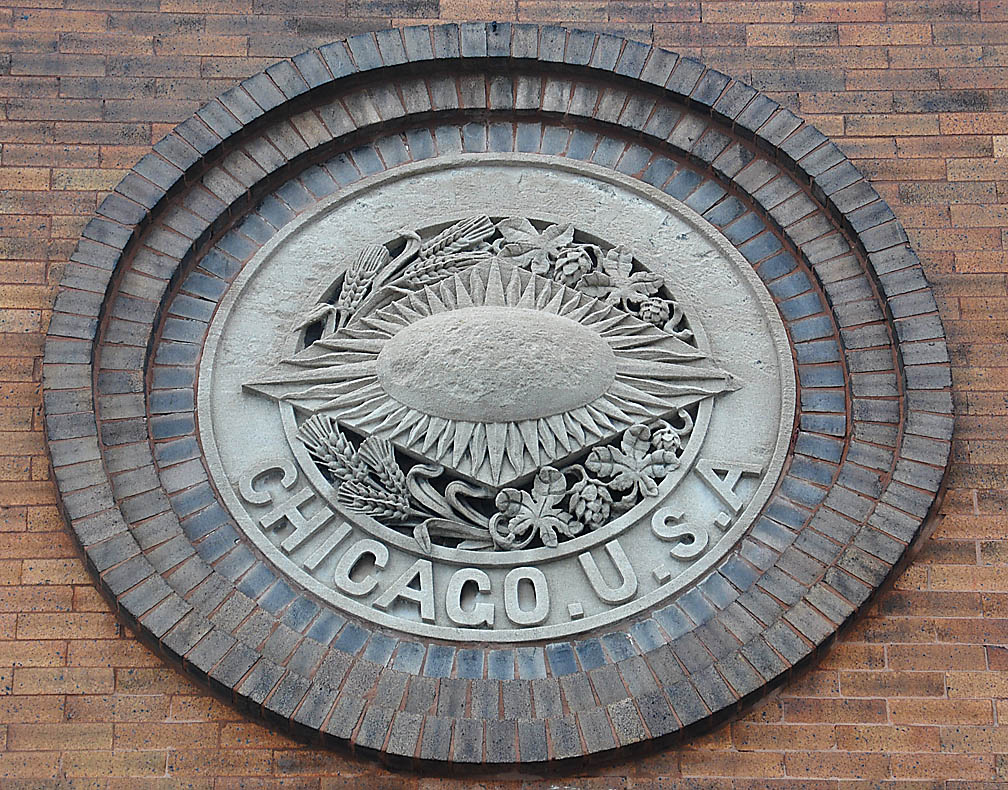
First item of this “series”.  Last August in Chicago, I came up this nice building feature & posted it here at the blog:

Well, one bit of info led to another as things often do when you’re surfing the ‘net.  Turns out, this is a partially obliterated Stege Brewery logo.  And part of a phenomenon known as “tied houses”.  The Schlitz Brewery was the most prolific producer of these and there are still lots of really nice examples remaining.  The Forgotten Chicago website has a fascinating, photo-rich discussion of them here:
http://forgottenchicago.com/features/chicago-architecture/tied-houses/

There are also lots of nice photos of these Schlitz buildings at Flickr:
http://www.flickr.com/search/?q=schlitz%20building&w=all